Among the drinking benchmarks, one often comes as a surprise: having at least two alcohol-free days a week. It's also one of the three questions in your Iris Prévention questionnaire. Why this precise number? And why not just "drink a little less"? Because these alcohol-free days act on something the weekly total doesn't reveal: automatism.
A daily drink, even a modest one, even "just a glass of wine at dinner", isn't only a matter of quantity. It's a habit that takes hold, and a body that never truly rests. Alcohol-free days act on both fronts at once. Here's what they really change, and how to set them up without it becoming a constraint.
1. Why two days, and not just "less"?
"Drinking less" is a vague intention: the brain doesn't quite know what to do with it. "Two days off" is concrete, measurable and binary, either you drank, or you didn't. It's an easy rule to keep and to check.
Arithmetically, these two days are also the most effective lever for staying under the 10-drinks-a-week benchmark: by reserving two alcohol-free days, five days remain, i.e. two drinks maximum per day to hold the target. But the essential point lies elsewhere: these regular pauses prevent daily consumption from becoming invisible, that point where you no longer even notice you're drinking every day.
2. What happens in the body on an alcohol-free day
- ●The liver finally gets a break. When you drink every day, the liver spends its time processing alcohol and never fully rests. An alcohol-free day gives it time to finish its work and begin its maintenance. Repeated, these days help limit the build-up of fat in the liver, which begins silently with regular consumption.
- ●Tolerance doesn't set in. Drinking every day accustoms the body: it gradually takes more to feel the same effect, and the dose creeps up. Alcohol-free days break this rise in tolerance and keep alcohol in its rightful place.
- ●Sleep recovers. An alcohol-free night is a genuine night of recovery: a calmer heart, preserved REM sleep, a clearer waking. It's often the benefit felt most quickly.
- ●Energy returns. Better hydration, better sleep: many describe more energetic mornings and a more stable mood after only a few alcohol-free days.
3. The real challenge: breaking the automatism
The daily drink quickly becomes a conditioned reflex. A trigger (getting home from work, 7 p.m., the sofa, the fridge door opening), a routine (pouring a drink), a reward (relaxation). Repeated evening after evening, the gesture becomes automatic: you do it without even deciding.
That's the real risk of daily consumption. When drinking is no longer a choice but an automatism, the amount increases without your noticing, and the drink loses its character as a small pleasure. Two alcohol-free days reintroduce choice into the equation: they recreate the distinction between habit and genuine desire, and you rediscover that you can unwind another way, a walk, a shower, a tea, a call to a loved one.
And if an alcohol-free day genuinely costs you? That isn't a failure, it's useful information: a sign that the drink has become more a habit, even a crutch, than a chosen pleasure. Without guilt, that's exactly the kind of observation a health professional can help you explore.
4. Should the two days be consecutive?
The benchmark speaks of at least two alcohol-free days, without requiring them to follow one another. Both approaches have merit:
- ●Two consecutive days give the liver and sleep a longer recovery window, and the benchmark is psychologically clearer ("weekend yes, Monday and Tuesday no").
- ●Two days spread through the week stagger the pauses and sometimes fit a busy social life better.
The best choice is the one you'll actually keep. In prevention, consistency beats perfection: two alcohol-free days held every week are worth more than an ambitious goal abandoned after a fortnight.
5. How to set up the ritual (without it being a punishment)
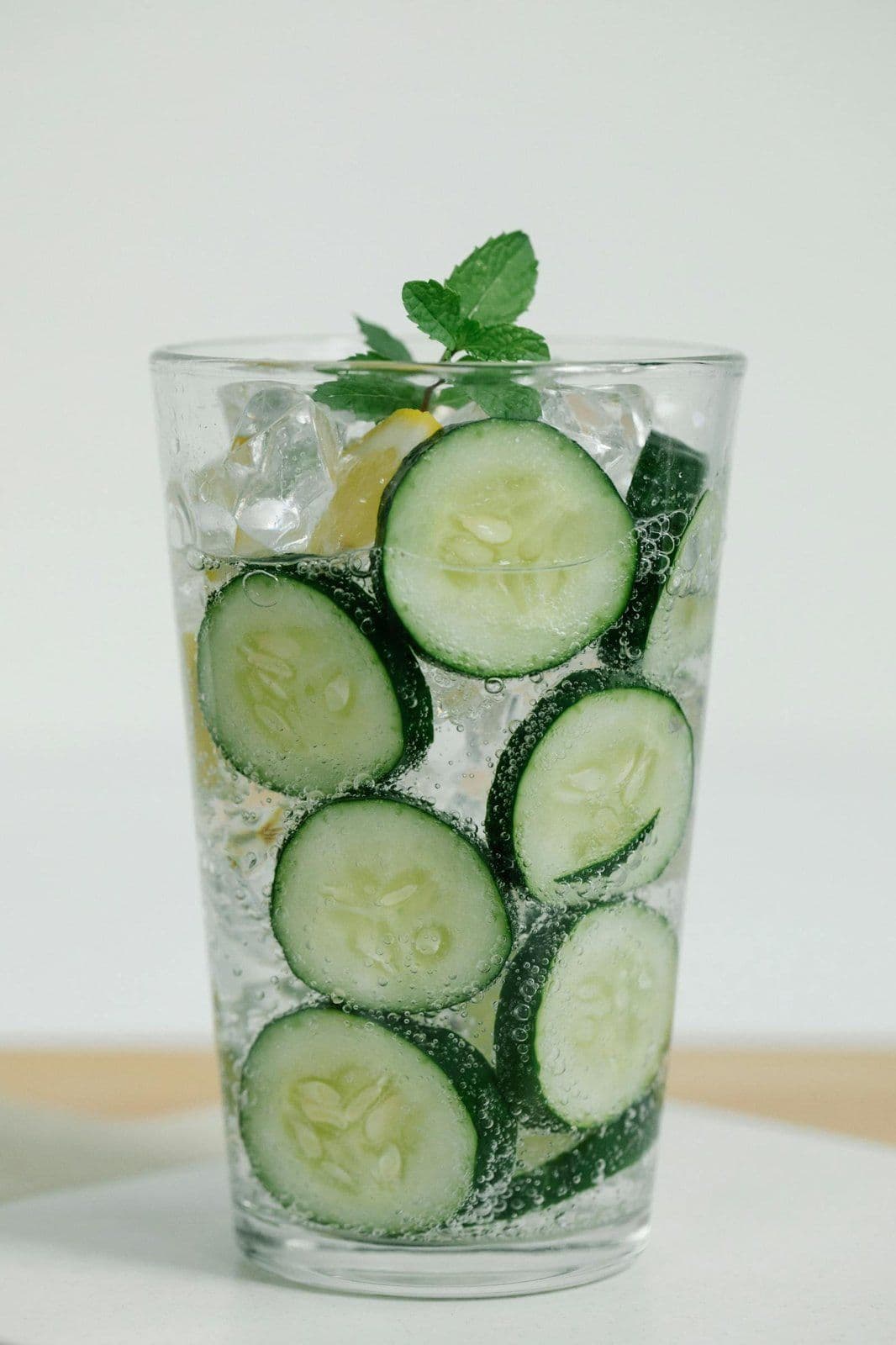
The key isn't willpower, but organisation. Choosing your two days in advance and always the same ones turns effort into a positive automatism: after a few weeks, these alcohol-free evenings no longer require any decision. You can also keep the ritual and simply change the drink, a flavoured sparkling water or an alcohol-free cocktail in the usual glass is often enough to satisfy the moment's need.
On the social side, a simple answer prepared in advance ("I'm not drinking tonight") and ordering your alcohol-free drink first avoid a lot of negotiation. And to concretely measure what these alcohol-free days bring you, an Iris Prévention health check-up links your consumption to your sleep, your energy and your indicators, and sets realistic goals suited to your daily life.
To go further
Related articles on the Iris Prévention blog:
- ●The standard drink: what if you're drinking more than you think?
- ●Alcohol and sleep: the false friend of your nights
- ●Cutting down without feeling frustrated: how to do it
- ●Alcool-Info-Service, information and help, anonymous and free: [https://www.alcool-info-service.fr/](https://www.alcool-info-service.fr/)
- ●Santé publique France, Lower-risk alcohol consumption benchmarks
💡 Key tips
- Set your two days in advance, and always the same ones. "Monday and Tuesday alcohol-free" works far better than "I'll drink less": the brain needs a clear, binary rule, not a vague good intention.
- Keep the ritual, change the drink. The craving is often about the moment (settling down at 7 p.m., unwinding) more than the alcohol itself. Pour yourself an alcohol-free drink in your usual glass: the gesture is satisfied, without the drawbacks.
- An alcohol-free day that costs you is valuable information. If a simple alcohol-free evening feels hard, it isn't a failure: it's a sign the drink has become more a habit (even a crutch) than a pleasure. Without judgment, and a professional can help if this is confirmed.
- Place your alcohol-free days when they matter. Set them before an important morning or after a bad night: you'll feel the benefit immediately (clear waking, energy), which anchors the habit for good.
- Measure the effect. An Iris Prévention check-up helps you situate your consumption against the benchmarks and see, concretely, what your alcohol-free days change in your sleep, energy and health indicators.
Sources and references
- Santé publique France / Assurance Maladie, Lower-risk alcohol consumption benchmarks (2017)
- World Health Organization, No level of alcohol consumption is safe for our health (2023)
- Wood AM et al., Risk thresholds for alcohol consumption (The Lancet, 2018)
- INSERM, Alcohol: effects of regular consumption on the body
- Alcool-Info-Service, alcool-info-service.fr
Iris Prévention, All rights reserved