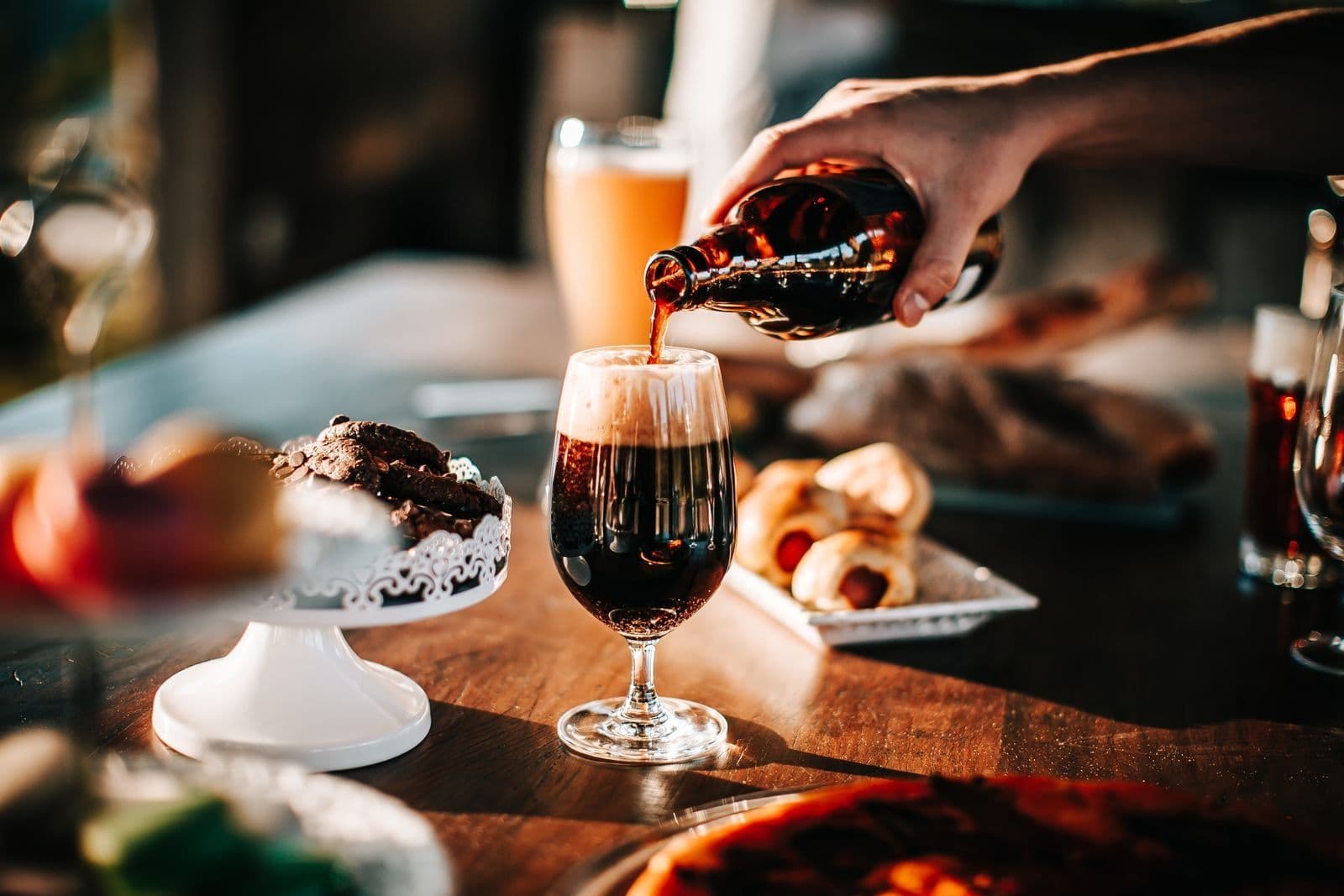
When you ask someone how much they drink, the answer almost always comes in glasses: "two or three glasses at the weekend," "a glass of wine in the evening." The trouble is that a glass at a friend's place, a glass at a restaurant and a glass poured at home almost never contain the same thing. As a result, most of us sincerely believe we drink less than we actually do. It isn't bad faith, we simply lack a common unit.
That unit exists, and it is used all over the world by health professionals: the standard drink. It's a discreet but remarkably useful tool, because it lets you "count" alcohol whatever the drink. Knowing it means being able to read your own consumption clearly, to see where you stand against the guidelines, and to understand what your questionnaire is actually measuring. Here are the essentials, simply.
1. What exactly is a standard drink?
In France, a standard drink corresponds to 10 grams of pure alcohol (ethanol), whatever the beverage. We reason in grams of alcohol, not in centilitres of liquid, because it's the amount of pure alcohol that matters for health: a small glass of a strong spirit can contain as much as a large glass of light beer.
The trick is that bars and cafés calibrate their measures so that a drink served at the counter corresponds, more or less, to one standard drink. That's why a half-pint of beer, a glass of wine or a measure of whisky contain roughly the same amount of pure alcohol: the stronger the drink, the smaller the serving. Here are the main equivalences:
| Drink | Amount | Strength (approx.) |
|---|---|---|
| Wine (red, white, rosé) | 10 cl | 12° |
| Beer | 25 cl | 5° |
| Champagne / sparkling wine | 10 cl | 12° |
| Aperitif (port, vermouth…) | 7 cl | 18° |
| Spirits (whisky, vodka, rum, gin…) | 3 cl | 40° |
| Pastis | 2.5 cl | 45° |
Good to know: these benchmarks apply to servings poured at the counter. At home, it's a whole different story, and that's exactly where the trap lies.
2. Why we (almost) always underestimate how much we drink
The glass poured at home is the main culprit behind our miscalculations. Three mechanisms combine, and they act without our noticing.
- ●Glasses have grown. A University of Cambridge study published in the BMJ (2017) measured the capacity of wine glasses in England over three centuries: it rose from about 66 ml in 1700 to nearly 450 ml in 2017, a sevenfold increase, with a clear acceleration since the 1990s. A modern wine glass can hold the equivalent of half a bottle. The bigger the glass, the more we fill it.
- ●We pour "by eye". For the same capacity, we pour about 12% more into a wide glass than into a narrow one, without realising it (study published in Substance Use & Misuse, 2013). A generously filled glass of wine can easily amount to two standard drinks on its own.
- ●We count in glasses, not in measures. When we refill the same glass several times over the course of an evening, we lose track. "I had two glasses" may well correspond to three or four standard drinks.
- ●The bottle, though, doesn't lie. A 75 cl bottle of wine at 12° contains about 7 standard drinks, not 5, as is often imagined. Shared between two people over a dinner, that's already nearly 3.5 drinks each: beyond the 2-drinks-a-day benchmark, for a single meal.
3. Where the benchmarks are, and why alcohol-free days matter so much
To limit the risks, the French health authorities propose three lower-risk drinking benchmarks for adults:
- ●no more than 10 standard drinks per week;
- ●no more than 2 standard drinks per day;
- ●and days in the week with no consumption at all.
These are exactly the three questions in your Iris Prévention questionnaire. We speak of "lower-risk" benchmarks, not "risk-free," because there is no completely safe threshold: risk increases with quantity, gradually. These benchmarks are a practical compromise to keep it in check.
As for alcohol-free days, they are not an arbitrary formality. Alcohol disrupts REM sleep from the very first drink: it makes falling asleep easier but degrades the quality of the night. Alcohol-free days give the body, sleep, liver, alertness, time to recover. They also break a powerful automatism: the aperitif or evening drink that becomes a reflex more than a real choice.
4. The standard drink isn't the same everywhere (and other pitfalls)
- ●A measure that changes from country to country. The standard drink is a national convention. France uses 10 g of pure alcohol, but the UK counts about 8 g per unit and the US about 14 g per "standard drink." A foreign recommendation expressed "in drinks" therefore does not translate directly into the French system.
- ●Cocktails and festive aperitifs. A single spritz, mojito or punch can hide two to three standard drinks. Sugar, bubbles and dilution mask the taste of alcohol: we underestimate the amount all the more.
- ●The endlessly topped-up glass. When a host tops up your glass the moment it drops, it becomes simply impossible to count. A simple strategy is better (see the tips).
5. What does knowing your standard drink actually change?
The goal isn't to count obsessively, or to feel guilty. It's to see clearly. Once you know how to convert what you drink into standard drinks, everything becomes simpler: you can situate yourself against the benchmarks, spot the occasions that really weigh on your week, and adjust without frustration, swap a drink for an alcohol-free version, add an alcohol-free day, choose a smaller glass.
It's a tool for clarity, not for deprivation. And that's precisely what your Iris Prévention questionnaire measures: not to judge, but to give you a personal reference point and advice tailored to your situation.
To go further
Related articles on the Iris Prévention blog:
- ●Alcohol and sleep: the false friend of your nights
- ●Two alcohol-free days a week: the little ritual that changes everything
- ●The hidden calories in your glass
- ●Alcool-Info-Service, information and help, anonymous and free: [https://www.alcool-info-service.fr/](https://www.alcool-info-service.fr/)
- ●Santé publique France, Lower-risk alcohol consumption benchmarks
💡 Key tips
- Count in bottles, not in glasses. A 75 cl bottle of wine at 12° is about 7 standard drinks, not 5. Shared between two over a dinner, it's already nearly 3.5 each, i.e. beyond the 2-drinks-a-day benchmark.
- Beware the wide glass. For the same amount, we spontaneously pour about 12% more into a large glass than a small one, without realising it. Always use the same glass and note your "fill line."
- The standard drink is a French measure (10 g of pure alcohol). In the UK, a unit is about 8 g; in the US, about 14 g. Recommendations "in drinks" from foreign sites are therefore not directly transposable.
- Calibrate your eye just once. Pour your spirits once with a measure (3 cl) and your wine with a measuring glass (10 cl): you'll see what a standard drink really looks like, and your "by eye" estimate will become far more accurate afterwards.
- Take stock with a health check-up. The Iris Prévention check-up helps you situate your consumption against the benchmarks, measure its concrete impact (sleep, energy, health indicators) and set realistic, personalised goals.
Sources and references
- Santé publique France / Assurance Maladie, Lower-risk alcohol consumption benchmarks (2017)
- Zupan Z, Evans A, Couturier DL, Marteau TM, Wine glass size in England from 1700 to 2017: a measure of our time (The BMJ, 2017)
- Pechey R et al., Wine glass size and wine sales: replication studies in bars (BMC Research Notes, 2017)
- Substance Use & Misuse (2013), Influence of glass size and shape on the amount of alcohol poured
- WHO, Alcohol: benchmarks and health risks
- Alcool-Info-Service, alcool-info-service.fr
Iris Prévention, All rights reserved