When you watch what you eat, you count the plate. The glass slips under the radar. Yet alcohol is a far-from-negligible source of calories, and doubly hidden: you don't really "eat" them, and above all, alcohol doesn't just add calories, it also changes the way the body handles the rest of the meal.
No question of feeling guilty or turning every aperitif into an anxious calculation. The idea is simply to know what's in the glass and how the body processes it, so you can make informed choices. Here's what really goes on.
1. Calories almost as "heavy" as fat
Alcohol provides about 7 kilocalories per gram. For comparison: carbohydrates (sugar) and protein provide 4, and fat 9. In other words, calorie-wise, alcohol is much closer to fat than to sugar.
And these are what we call "empty" calories: no vitamins, no minerals, no fibre, no protein, pure energy, with no nutritional value at all. On top of that, many drinks (cocktails, cider, sweet wines, premixes) add a good dose of sugar. A single standard drink already amounts to about 70 kcal for the alcohol alone, before even counting the sugar and the accompaniments.
2. How much is in my glass, really?
Here are some orders of magnitude. They vary with the strength of the drink and the amount of sugar, but they give an accurate idea:
| Drink | Serving | Calories (approx.) |
|---|---|---|
| Wine (red, white, rosé) | 1 glass, 12 cl | 100-120 kcal |
| Beer | 1 half-pint, 25 cl | 100-110 kcal |
| Beer | 1 pint, 50 cl | 200-220 kcal |
| Champagne / sparkling | 1 flute, 10 cl | 80-90 kcal |
| Neat spirit | 1 measure, 3 cl | 65 kcal |
| Spirit + sugary soda | 1 long drink | 150-250 kcal |
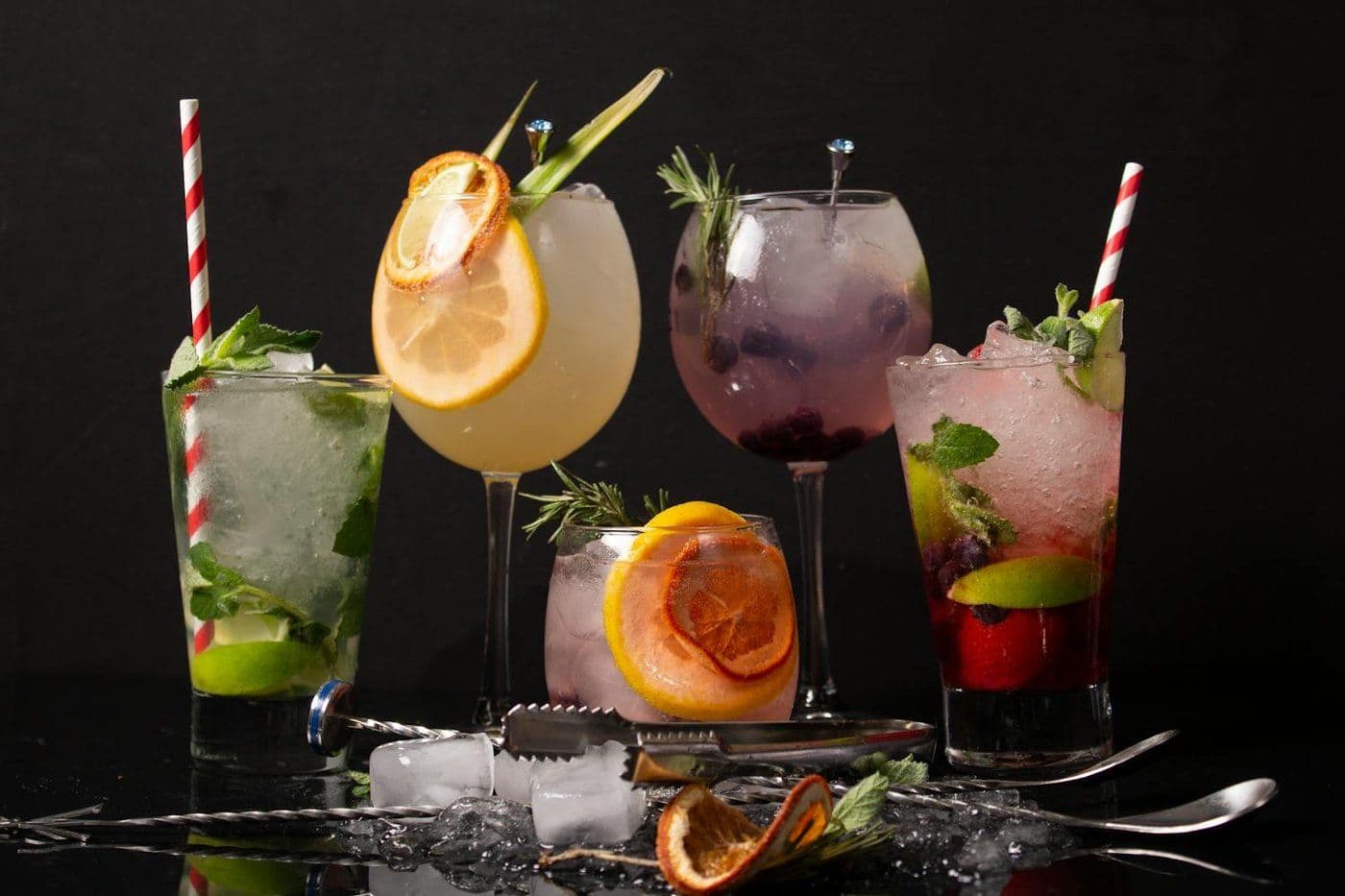
| Sweet cocktail (mojito, piña colada…) | 1 glass | 200-400 kcal |
Remember: a sweet cocktail can equal a slice of cake, and a spirit lengthened with soda sees its calories double or triple compared with the spirit alone.
3. The mechanism no one sees: fat burning goes on pause
This is the least known point, and the most important. The body can't store alcohol and treats it as a substance to be eliminated as a priority. As long as there's alcohol to process, the body burns it first… and puts fat burning on hold.
A landmark study (Suter et al., New England Journal of Medicine, 1992) measured this: fat burning drops by about a third while the body metabolises alcohol. Concretely, the fats from the meal and the nibbles aren't burned but stored, preferentially around the abdomen. So it isn't just "one extra glass of wine": it's that glass, plus the rest of the meal set aside instead of being used. The famous double whammy.
4. The trap isn't only in the glass
Two other mechanisms add to the bill, often more than the drink itself:
- ●Alcohol opens the appetite. It stimulates hunger and lifts inhibitions: you reach more readily for the crisps and charcuterie, you dine more heavily, you snack late. The calories around the glass frequently exceed those in the glass.
- ●Liquid calories don't fill you up. Drinking 300 kcal of cocktail does nothing to reduce what you'll eat afterwards, unlike 300 kcal of solid food. The body doesn't "register" liquid calories as a real meal: they add up, without subtracting anything.
The real cost of an aperitif is therefore: the drink + the snacks + a more generous dinner + fat stored rather than burned. It becomes easier to see why the daily drink eventually shows.
5. Lightening the bill without spoiling the pleasure
The point isn't to cut everything out, but to work a few simple settings. Lengthening a spirit with sparkling water and lemon rather than soda or juice divides the calories by two or three. Reading a sweet cocktail like a dessert helps you save it for occasions. Going back to reasonably sized glasses mechanically limits the amounts. And alcohol-free days offer both a calorie pause and a metabolic respite.
Finally, not drinking on an empty stomach avoids the appetite spike that follows. To link all this to your personal situation, an Iris Prévention health check-up cross-references your consumption, your weight and your metabolic indicators, and sets realistic goals, without deprivation or guilt.
To go further
Related articles on the Iris Prévention blog:
- ●The standard drink: what if you're drinking more than you think?
- ●Mocktails and alcohol-free drinks: the pleasure without the hangover
- ●Two alcohol-free days a week: the little ritual that changes everything
- ●Manger Bouger, French national nutrition and health programme: [https://www.mangerbouger.fr/](https://www.mangerbouger.fr/)
- ●Santé publique France, Lower-risk alcohol consumption benchmarks
💡 Key tips
- Alcohol weighs almost as much as fat. At 7 kcal per gram, it's more caloric than sugar (4 kcal/g) and close to fat (9 kcal/g), and these are "empty" calories, with no nutritional value whatsoever.
- The real mechanism: alcohol pauses fat burning. As long as the body is eliminating alcohol, it stops burning fat and stores the rest of the meal, often around the belly. It isn't just "+150 kcal," it's "+150 kcal and the meal set aside."
- The calories are often around the glass, not in it. Alcohol opens the appetite and lifts inhibitions: crisps, charcuterie, heavier meals, late snacking… The aperitif bill often exceeds that of the drink itself.
- Liquid calories don't fill you up. A 300 kcal cocktail won't make you eat less afterwards, unlike 300 kcal of food: they simply add up. So read a sweet cocktail like a dessert.
- Lighten up without frustration. A spirit lengthened with sparkling water and lemon rather than soda, smaller glasses, alcohol-free days: three simple, painless levers. An Iris Prévention check-up helps link consumption, weight and metabolic indicators, and set realistic goals.
Sources and references
- Suter PM, Schutz Y, Jéquier E, The effect of ethanol on fat storage in healthy subjects (New England Journal of Medicine, 1992)
- Sayon-Orea C, Martínez-González MA, Bes-Rastrollo M, Alcohol consumption and body weight: a systematic review (Nutrition Reviews, 2011)
- US National Academies, Review of Evidence on Alcohol and Health (2024): alcohol ≈ 7 kcal/g, priority oxidation of ethanol
- Santé publique France / Manger Bouger, Alcohol and nutrition (PNNS)
- Santé publique France, Lower-risk alcohol consumption benchmarks (2017)
Iris Prévention, All rights reserved