For a long time, asking for an alcohol-free drink at a party meant settling for a soda or a glass of water, slightly apart from the fun. Those days are over. "Alcohol-free" has become a genuine world, creative and flavourful, where you rediscover the pleasure of taste and ritual, without the headache or the ruined next morning.
Whether you want to cut down, take a break, or simply add variety, here's how to find your way: what has changed, the secret to a good mocktail, the trap to avoid, what the labels really hide, and a few ideas to try tonight.
1. Alcohol-free has changed its face
Driven by the "no/low" movement (no and low alcohol), the alternatives aisle has boomed in recent years. And above all, quality has taken a leap. 0.0 beers are now brewed like the others then de-alcoholised, which keeps their taste. There are de-alcoholised wines and spritzes, alcohol-free spirits for cocktails, flavoured sparkling waters, kombuchas… enough to put together a full aperitif without a drop of alcohol. In France, alcohol-free beer has even become the most consumed category in this segment.
2. The secret to a good mocktail: replace what alcohol does
A mocktail is an alcohol-free cocktail ("mock" means to imitate). The whole art lies in recreating what alcohol brings to a drink, giving it that "grown-up" character. Alcohol actually brings several things: a little warmth and "bite," bitterness and complexity, well-integrated acidity and length on the palate. Good mocktails recreate each one:
- ●the bite → with ginger, a hint of chilli, spices or fine bubbles;
- ●bitterness and complexity → with a dash of bitters, tea, coffee, citrus zest or herbs (rosemary, thyme, basil);
- ●acidity and balance → with lemon, lime, verjus or a shrub (vinegared syrup);
- ●length and texture → with a little homemade syrup, good ice, even a cloud of chickpea water for foam.
It's precisely this complexity, not sugar, that makes a well-built mocktail as enjoyable as a real cocktail.
3. The real trap: sugar
Many shop-bought mocktails and alcohol-free "festive" drinks are in fact very sugary: a large glass can then rival a dessert. Yet if you choose alcohol-free partly for health, replacing alcohol with a mountain of sugar means swapping one problem for another.
The remedy is simple: favour drinks that play on acidity, bitterness, herbs and bubbles rather than syrup, and glance at the label. "Alcohol-free" doesn't mean "calorie-free." Good news, though: alcohol-free beer is generally far less caloric than its classic version.
4. "Alcohol-free," "0.0": what the labels really say
The label "alcohol-free" is more flexible than you'd think. In France, a beer can be labelled "alcohol-free" while containing up to 1.2% vol, even if, in practice, most are well below 0.5%. For wine, "de-alcoholised" corresponds to a content below 0.5% vol. Only the "0.0%" indication guarantees a near-zero, undetectable alcohol level.
For most people, this difference is inconsequential: we're talking about traces comparable to those in a very ripe fruit juice. But it really matters in certain situations, pregnancy, driving, medical treatment, where it's better to choose a "0.0%" product and read the label. And in cases of dependence or withdrawal, the taste and the ritual can reawaken the craving: a point to discuss with a health professional.
5. Five ideas to try tonight
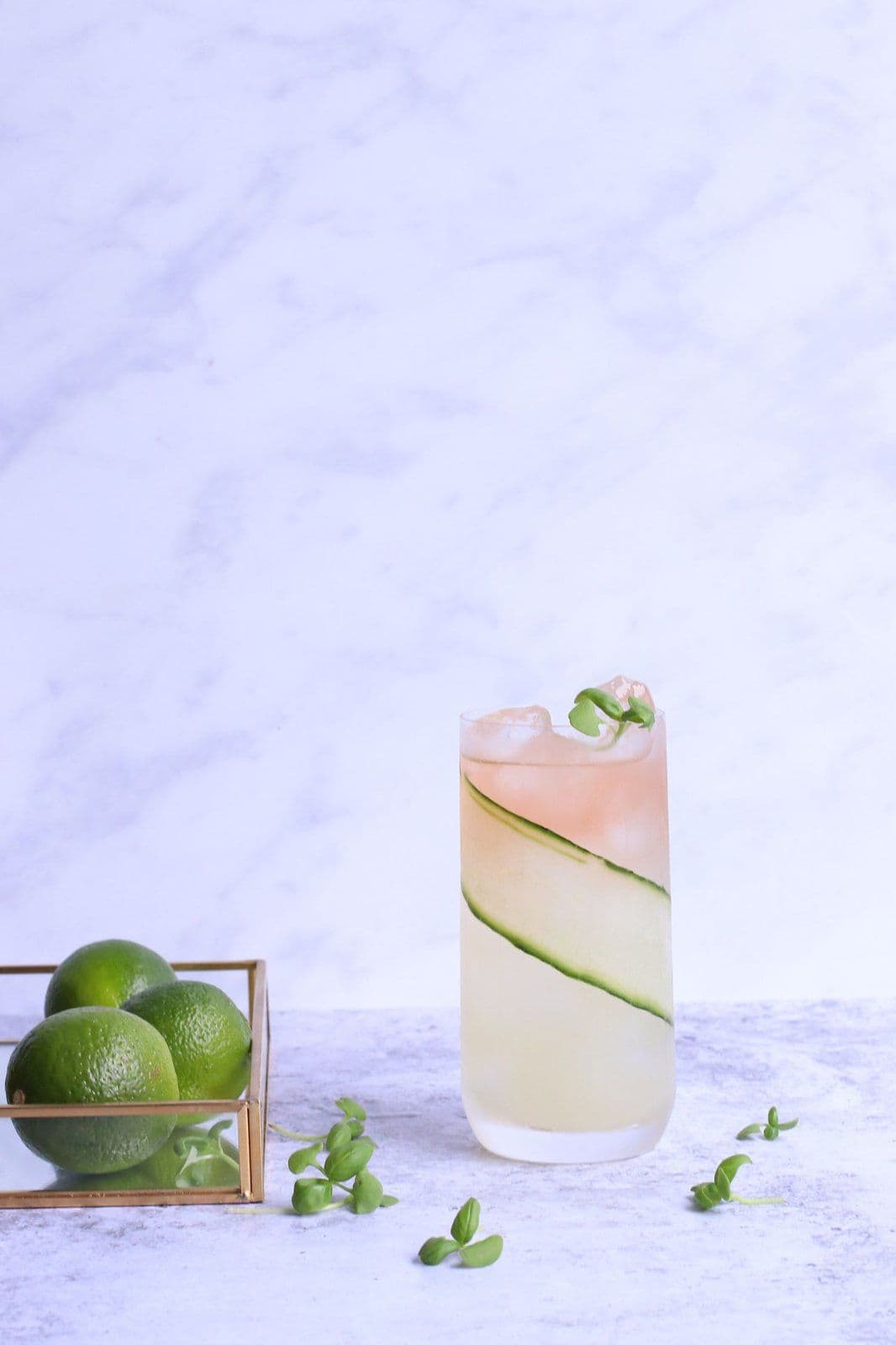
- ●Sparkling water, lime, thin cucumber slices and mint, fresh and clean.
- ●Tonic, homemade ginger syrup and a sprig of rosemary, a strikingly good faux gin and tonic.
- ●Homemade iced tea (black tea or hibiscus) with citrus and a little honey.
- ●Alcohol-free "spritz": de-alcoholised aperitif, sparkling water and a slice of orange.
- ●Well-chilled sparkling grape juice, in a flute, to toast just like with champagne.
To go further
Related articles on the Iris Prévention blog:
- ●Cutting down without feeling frustrated: how to do it
- ●The hidden calories in your glass
- ●Two alcohol-free days a week: the little ritual that changes everything
- ●Alcool-Info-Service, information and help, anonymous and free: [https://www.alcool-info-service.fr/](https://www.alcool-info-service.fr/)
- ●Santé publique France, Lower-risk alcohol consumption benchmarks
💡 Key tips
- The pros' secret: recreate what alcohol brings, the "bite," bitterness and length on the palate, with ginger, herbs (rosemary, basil), citrus, a dash of bitters and good bubbles. That's what sets a "grown-up" mocktail apart from a plain fruit juice.
- Beware the sugar. Replacing alcohol with syrup means swapping one problem for another. Prefer drinks built on acidity, bitterness and effervescence rather than sugar: "alcohol-free" doesn't mean "calorie-free."
- "Alcohol-free" doesn't always mean 0.0. In France, an "alcohol-free" beer can contain up to 1.2% vol, and a "de-alcoholised wine" up to 0.5%. Only the "0.0%" label guarantees a near-zero level, a detail that matters in pregnancy, driving or withdrawal.
- Keep the ritual, not the alcohol. The same nice glass, the same ice, the same garnish: the brain recovers the moment it was after, and that's often what matters, far more than the alcohol itself.
- To toast without pressure: an (alcohol-free) glass in hand, and no one offers to refill it. An Iris Prévention check-up helps you situate your consumption and make alcohol-free a real pleasure, never a deprivation.
Sources and references
- Decree No. 2016-1531 (labelling of brewing products), definition of "alcohol-free" beer (≤ 1.2% vol)
- Regulation (EU) 2021/2117, "de-alcoholised wine" label (< 0.5% vol)
- Regulation (EU) No. 1169/2011 (FIC), nutritional information for foodstuffs
- Santé publique France, Lower-risk alcohol consumption benchmarks (2017)
- Alcool-Info-Service, alcool-info-service.fr
Iris Prévention, All rights reserved