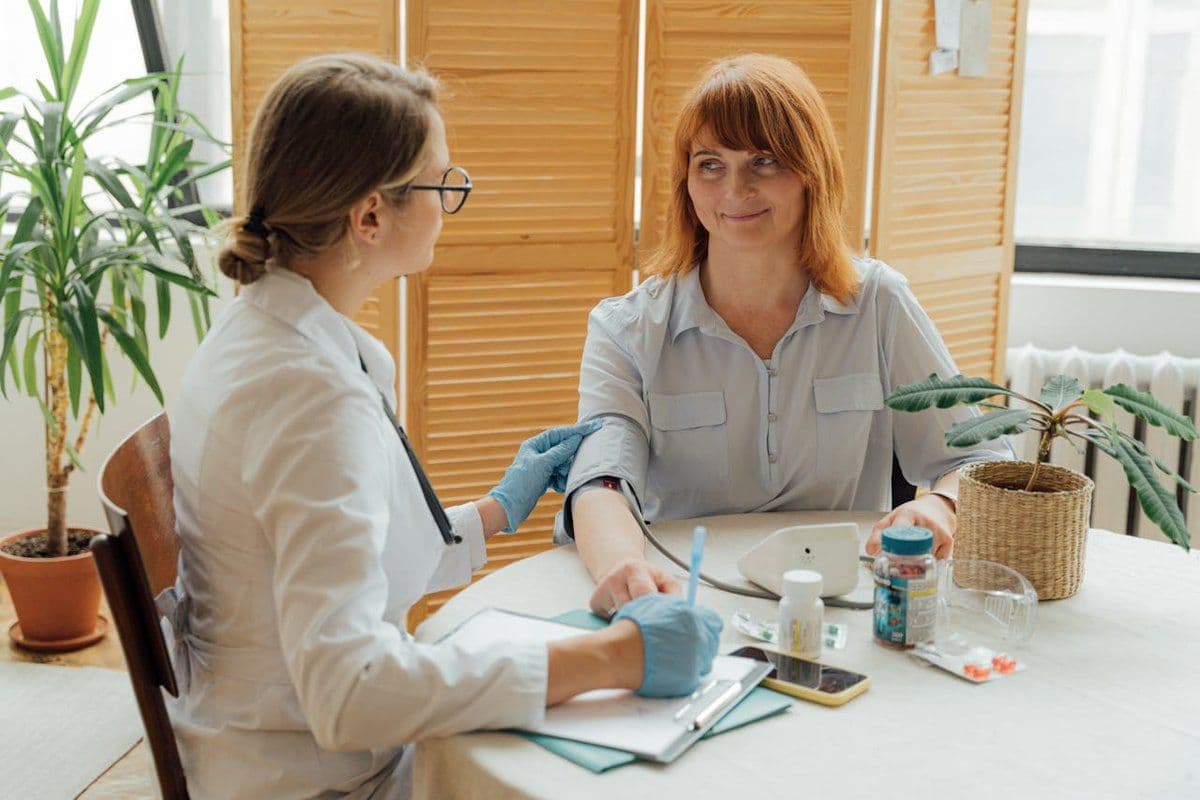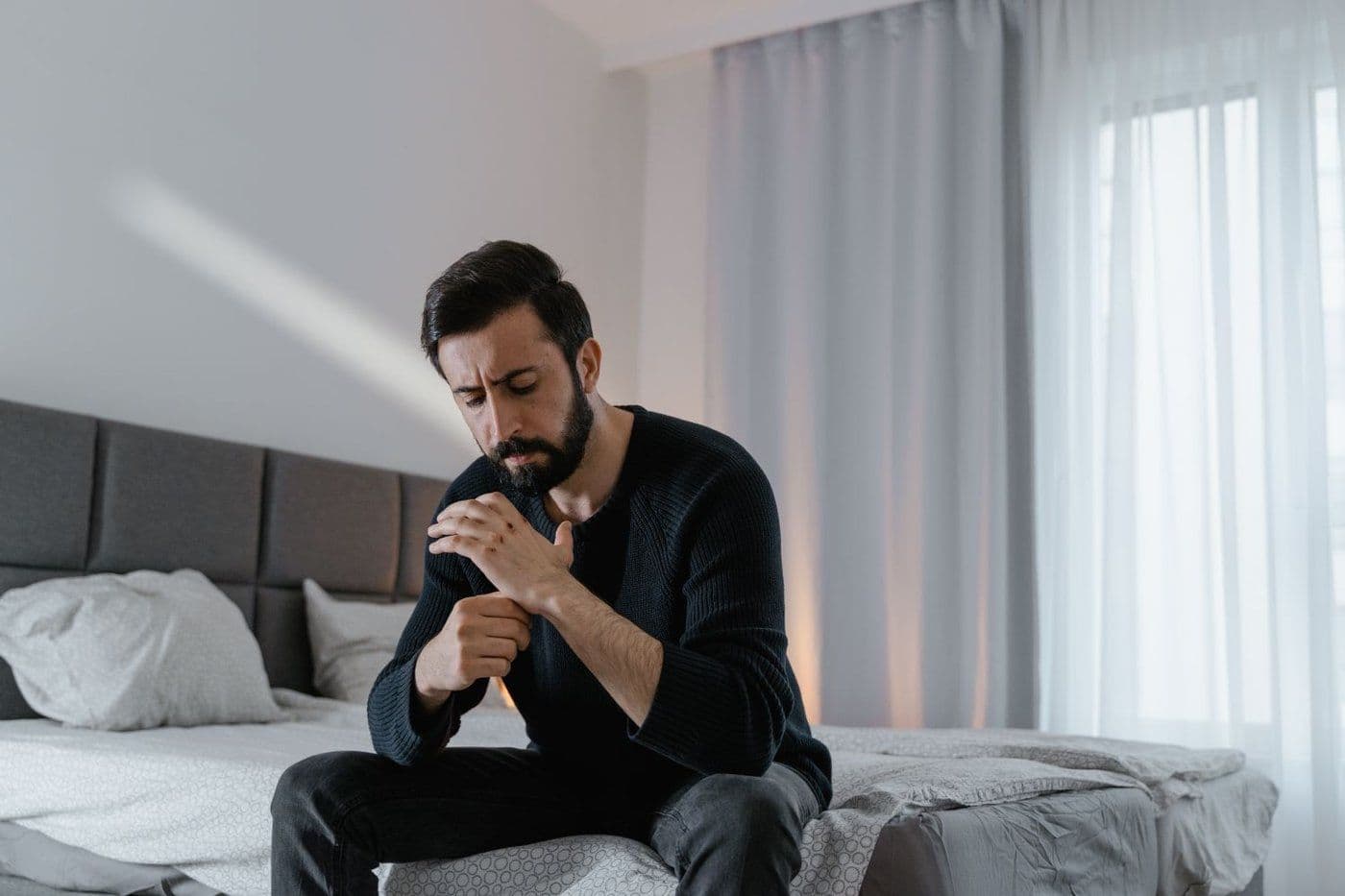
"Hangxiety" is a blend of the English words hangover and anxiety. It refers to that diffuse anxiety, sometimes a knot in the stomach and a feeling of unease, that sets in the day after a drink-heavy evening, or even after just one or two drinks too many. You ruminate over what you said, your heart races for no reason, you feel raw. Many experience it regularly without ever putting a word to it.
The paradox is total: we often drink precisely to relax, release the pressure, feel more at ease socially. So why does the effect reverse the next day? The answer lies in how the brain reacts to alcohol. Understanding it helps you avoid getting trapped in a vicious circle. Here's what really happens.
1. Why alcohol relaxes you in the moment
To simplify, the brain runs on an accelerator and a brake. The accelerator (a chemical messenger called glutamate) stimulates mental activity; the brake (another messenger, GABA) calms and soothes it.
Alcohol presses the brake and eases off the accelerator. Immediate result: thoughts slow, inhibitions fall, anxiety fades, you feel relaxed and more sociable. This soothing effect is very real, it's exactly what makes alcohol so tempting as an evening "anti-stress."
2. The chemical backlash (hangxiety)
But the brain hates imbalance: it constantly seeks to return to its set point. Faced with this artificial brake, it compensates by reducing its own brake (GABA) and calling more on the accelerator (glutamate).
When alcohol leaves the body, during the night and the next morning, the artificial brake disappears… but the accelerator is still running at full throttle. The brain then tips into the opposite excess: anxiety, a racing heart, agitation, hypersensitivity, irritability. That's hangxiety. It often peaks just as the alcohol level returns to zero, typically the following morning. It's a passing rebound, not a faithful reflection of reality.
Two factors make the picture worse. On one hand, alcohol drives up cortisol, the stress hormone, whose system is thrown off the next day. On the other, the night was poor quality (crushed REM sleep, micro-awakenings): and a poorly rested brain regulates its emotions far less well and perceives everything as more threatening.
3. The vicious circle to know about
This is where the trap closes. When you drink to soothe stress or social anxiety, the next day's rebound brings back… anxiety. Which prompts drinking again to relieve it (the famous "hair of the dog"), with immediate relief but an even stronger rebound afterwards. That's the self-medication trap.
Over time, the brain's natural soothing system becomes less effective without alcohol: background anxiety rises, and dependence on this chemical crutch gradually sets in. One phrase sums it all up: alcohol doesn't add calm, it borrows it from tomorrow, and repays it with interest.
4. Who is most affected?
Hangxiety doesn't hit everyone the same way. Naturally anxious or shy people tend to feel a more marked next-day anxiety: a study by the universities of Exeter and UCL (Marsh et al., 2019) showed that highly shy individuals experience significantly more hangxiety, precisely because they rely more on alcohol's disinhibiting effect in social settings.
People already living with an anxiety disorder are doubly exposed: more inclined to use alcohol to cope, and more sensitive to the rebound. An important point, without any judgment: if you notice you drink mainly to manage stress, anxiety or social situations, it isn't a flaw, it's precisely the moment to talk about it and build other tools.
5. How to get out of (or not enter) the spiral
The most effective lever acts upstream: the amount and the "why" you drink. Drinking less, and above all not making alcohol your answer to stress, defuses the mechanism at its root. In the moment, in the grip of hangxiety, the most useful thing is to remember that the state is chemical and temporary: no important decisions or rumination in this state, but water, a proper meal, some daylight, a walk and slow breathing.
For the underlying issue, the real answers to stress and anxiety are known and lasting: physical activity, breathing, quality sleep, social connection, and support from a professional when needed. The drinking benchmarks and alcohol-free days, for their part, help rebalance the brain's brake/accelerator mechanism. An Iris Prévention health check-up links your consumption, your sleep and your mental well-being, to act before the spiral sets in.
To go further
Related articles on the Iris Prévention blog:
- ●Alcohol and sleep: the false friend of your nights
- ●Understanding anxiety: mechanisms and first responses
- ●Everyday stress: identifying its sources and managing them
- ●Alcool-Info-Service, information and help, anonymous and free: [https://www.alcool-info-service.fr/](https://www.alcool-info-service.fr/)
- ●Santé publique France, Lower-risk alcohol consumption benchmarks
💡 Key tips
- Relaxation isn't free, it's borrowed. Alcohol doesn't "add" calm: it presses the brain's brake, which then compensates by over-revving. The evening's soothing is paid for in next-day anxiety, with interest.
- In the grip of hangxiety, decide nothing and don't ruminate. Your brain is in a false chemical alarm: what you feel isn't a reflection of reality. The anxiety subsides on its own within a few hours, as balance is restored.
- Skip the coffee and the "hair of the dog." Coffee adds jitteriness, and drinking again only postpones the backlash. Water, a proper meal, daylight and a short walk soothe far faster.
- If you drink mainly to manage stress or shyness, that's the key signal. It isn't a flaw, but the right moment to set up other tools (breathing, physical activity, sleep, support from a loved one), and to talk to a professional if needed. Alcohol relieves the moment and worsens the underlying issue.
- Take stock. An Iris Prévention check-up helps link consumption, sleep and mental well-being, and spot whether alcohol has become an answer to stress, to act before the spiral sets in.
Sources and references
- Marsh B, Carlyle M, Carter E, … Morgan CJA, Shyness, alcohol use disorders and 'hangxiety': a naturalistic study of social drinkers (Personality and Individual Differences, 2019)
- Koob GF, Volkow ND, Neurocircuitry of addiction (Neuropsychopharmacology, 2010)
- INSERM, Alcohol: effects on the brain and mental health
- Santé publique France, Lower-risk alcohol consumption benchmarks (2017)
- Alcool-Info-Service, alcool-info-service.fr
This article deals with a sensitive subject. If anxiety or alcohol consumption weighs on your daily life, talk to your GP or contact Alcool-Info-Service (0 980 980 930, standard-rate call).
Iris Prévention, All rights reserved