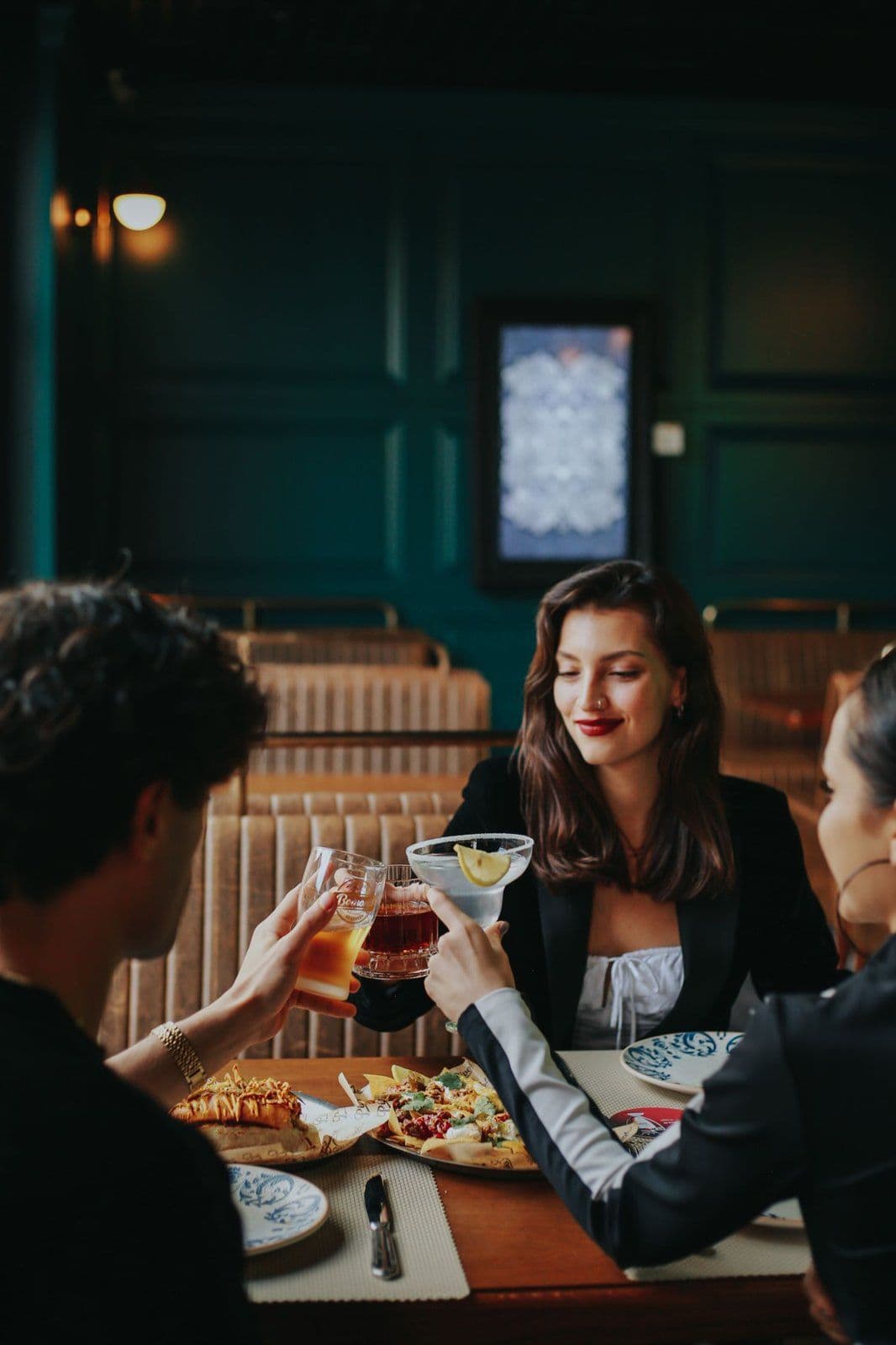
Alone at home, choosing not to drink or to stop is fairly simple. In company, it's a whole other matter, and the professional setting is probably the trickiest of all. Afterworks, leaving drinks, seminars, client dinners: between conviviality, hierarchy and the famous "come on, just one," it quickly becomes hard to hold your line.
Yet staying in control socially is not only possible, but increasingly common. Here's why it's harder at work, and above all how to go about it, without awkwardness and without spoiling the moment.
1. Why it's harder at work than elsewhere
Several forces combine. First, social conformity: you don't want to be the only one not toasting. Then hierarchy, a drink offered by a superior or a client is harder to refuse. There's the ritual of rounds, which aligns everyone with the pace of the fastest. And there's that old idea of alcohol as a "social lubricant," supposedly making networking easier.
Add a discreet trap: while chatting, you completely lose count of what you drink. And a work-specific stake: what's said or done at the afterwork stays in colleagues' memories, and is sometimes paid for the very next day at the office.
2. The false dilemma of "drink or stand out"
We often think we have only two options: go with the flow, or come across as rigid. It's a false dilemma. First because the norm has changed: not drinking, or drinking little, has become common and perfectly accepted. Second because no one is watching you as much as you imagine.
Psychologists have a name for this: the "spotlight effect." We massively overestimate the attention others pay to our choices, simply because we ourselves think about them. In fact, everyone is focused on themselves, and your glass of soft drink goes almost unnoticed. Conviviality isn't in the glass: you can be warm, funny and fully present without a drop of alcohol.
3. The toolbox in a work context
A few simple reflexes let you hold your line with no apparent effort:
- ●Arrive with a plan. Deciding in advance ("two drinks, then water," or "no alcohol tonight") avoids having to choose in the heat of the moment.
- ●Keep a full glass in hand. As long as your glass isn't empty, even a soft drink, no one offers to refill it.
- ●Order first. Calmly announcing your alcohol-free drink from the start often sets the tone, and some will follow.
- ●Make it last, alternate, eat. Sipping without emptying your glass, alternating with water and not drinking on an empty stomach: you naturally slow down.
- ●Have a simple, non-negotiable reason. "I'm driving," "I'm an early bird," "not tonight": short, with a smile, without piling on explanations.
4. When you're the host (or the manager)
The context changes when you organise the event, or lead a team. A few gestures make all the difference and send a strong signal: offering attractive alcohol-free options from the start (not just water and a lukewarm juice), never pressing someone who declines, and avoiding making alcohol the centre of gravity of the evening.
A manager sets the tone without even meaning to: if the person in charge keeps pushing "another?", younger or newer staff will feel obliged to follow. Thinking inclusively, finally, means remembering that some people don't drink, for reasons of health, pregnancy, conviction or personal history. A good gathering is one where no one has to justify their glass.
5. The image stake, and getting home
Two points are worth pausing on. Image, first: what you say or do under the influence in front of colleagues or clients leaves traces, and the bill is sometimes settled in credibility. Staying the version of yourself you'll be happy with the next day also protects your professional life.
Safety, next: only time lowers blood alcohol, never coffee or fresh air. If you've been drinking, plan the journey home (public transport, taxi, designated driver). And the next-day cost, fatigue, anxiety, dip in performance, is anything but trivial. Staying in control socially isn't depriving yourself: it's making choices you won't regret. An Iris Prévention health check-up can help you clarify your benchmarks and hold them, even in the most festive moments.
To go further
Related articles on the Iris Prévention blog:
- ●Cutting down without feeling frustrated: how to do it
- ●Mocktails and alcohol-free drinks: the pleasure without the hangover
- ●Hangxiety: when alcohol feeds anxiety instead of easing it
- ●Alcool-Info-Service, information and help, anonymous and free: [https://www.alcool-info-service.fr/](https://www.alcool-info-service.fr/)
- ●Santé publique France, Lower-risk alcohol consumption benchmarks
💡 Key tips
- Keep a glass in hand, even alcohol-free. A full glass (sparkling water, soft drink, 0.0 beer) is the best shield: no one offers to refill it, and you don't stand out. It's the most effective accessory at a party.
- "Not tonight, thanks" is a complete sentence. You owe no justification. The more you explain, the more you open the door to negotiation. A calm, smiling refusal closes the subject, without awkwardness.
- Beware the round. The rounds system paces everyone to the fastest. Get yourself (and others) a soft drink, or simply step out of the round: your liver doesn't have to keep up with the group's.
- No one is watching you as much as you think. We hugely overestimate others' attention to our choices, psychologists call it the "spotlight effect." In reality, everyone is focused on themselves: not drinking goes almost unnoticed.
- Leave before the "second wind." Most slip-ups, words too many, drinks too many, happen late in the evening. Decide your departure time in advance. An Iris Prévention check-up helps keep these benchmarks in mind, including at work.
Sources and references
- Santé publique France, Lower-risk alcohol consumption benchmarks (2017)
- Gilovich T, Medvec VH, Savitsky K, The spotlight effect in social judgment (Journal of Personality and Social Psychology, 2000)
- INRS, Addictive behaviours in the workplace: benchmarks and prevention
- Alcool-Info-Service, alcool-info-service.fr
Iris Prévention, All rights reserved